Kitakata Ramen

Experience the soul of Fukushima with this authentic Kitakata Ramen, famous for its distinctively thick, flat, and wavy high-hydration noodles. The clear broth combines a light pork base with delicate dashi, creating a deeply savory shoyu experience that is both comforting and sophisticated.
Prep
40m
Cook
180m
Serves
4
1 Ingredients
| Qty | Ingredient |
|---|---|
| 1 lb 450 g | Pork belly (for Chashu) |
| 2 lbs 900 g | Pork soup bones |
| 1 lb 450 g | Chicken carcasses |
| 0.5 cup 30 g | Dried Niboshi (sardines) |
| 1 piece 10 g | Kombu (dried kelp) |
| 0.75 cup 180 ml | Soy sauce |
| 0.25 cup 60 ml | Mirin |
| 4 portions 600 g | Thick wavy ramen noodles |
| 0.5 cup 100 g | Menma (fermented bamboo shoots) |
| 2 stalks 20 g | Green onions, sliced |
| 4 slices 40 g | Narutomaki (fish cake) |
2 Method
Step 1. Prepare the broth base by blanching the pork bones and chicken carcasses in boiling water for 10 minutes; drain and rinse thoroughly to ensure a clear soup.
Step 2. Place the cleaned bones back in a large pot with 3 liters of fresh water, ginger, and garlic. Simmer gently on low heat for 3 hours, skimming any foam that rises to the surface.
Step 3. In the final 30 minutes of broth cooking, add the niboshi and kombu to infuse the dashi flavor, then strain the entire broth through a fine-mesh sieve.
Step 4. Create the 'Tare' (seasoning) by simmering the soy sauce, mirin, and a small portion of the pork cooking liquid in a small saucepan until slightly reduced.
Step 5. Prepare the chashu by braising the pork belly in a mixture of soy sauce, ginger, and sugar until tender, then slice into thin rounds.
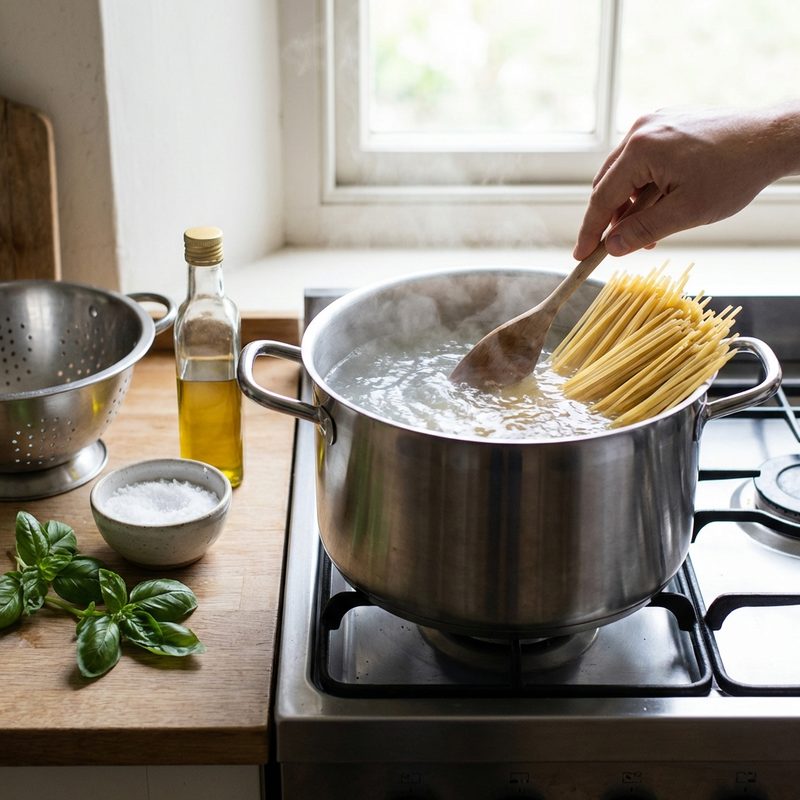
Step 6. Cook the thick, wavy noodles in a separate pot of boiling water according to package directions, typically 3-4 minutes for a chewy texture.
Step 7. To assemble, place 3 tablespoons of tare into each bowl, followed by 1.5 cups of the hot broth. Add the cooked noodles and stir gently.
Step 8. Top each bowl with chashu slices, menma, a slice of narutomaki, and a generous handful of chopped green onions.
💡 Chef's Tips
-
·
For authentic Kitakata texture, 'massage' your noodles by hand before boiling to enhance the wavy shape.
-
·
Never let the broth reach a rolling boil; a gentle simmer is the secret to a clear, clean-tasting soup.
-
·
Soak the niboshi (dried sardines) in the water overnight before starting the broth for a deeper umami profile.
-
·
Use high-hydration noodles if available, as they are the hallmark of this regional style.


Be the first to leave a comment.