Hakata Ramen

Experience the soul of Fukuoka with this authentic Hakata Ramen, featuring a silky-smooth, ivory-white pork bone broth that has been simmered to perfection. Topped with tender chashu, wood ear mushrooms, and pickled ginger, every slurp delivers a profound umami depth characteristic of Japan's most iconic ramen style.
Prep
60m
Cook
720m
Serves
4
1 Ingredients
| Qty | Ingredient |
|---|---|
| 2 kg 2000 g | Pork trotters and neck bones |
| 1 large 1 piece | White onion, halved |
| 10 cloves 10 cloves | Garlic cloves, smashed |
| 2 inch piece 50 g | Fresh ginger, sliced |
| 4 servings 400 g | Thin, straight ramen noodles |
| 8 slices 8 slices | Chashu pork slices |
| 2 eggs 2 eggs | Ajitsuke Tamago (marinated soft-boiled eggs) |
| 0.5 cup 50 g | Wood ear mushrooms (kikurage), sliced |
| 2 tablespoons 30 g | Beni shoga (pickled red ginger) |
| 4 stalks 4 stalks | Green onions, finely chopped |
| 0.25 cup 60 ml | Soy sauce (for the tare) |
| 2 tablespoons 30 ml | Mirin (for the tare) |
2 Method
Step 1. Prepare the bones by soaking them in cold water for at least 1 hour to release marrow and blood. Drain and rinse.
Step 2. Place bones in a large stockpot, cover with fresh water, and bring to a rolling boil for 15 minutes. Drain the water and scrub every bone under cold running water to remove any dark marrow or impurities—this ensures a white broth.
Step 3. Return the clean bones to the pot and cover with 5 liters of fresh water. Add onion, garlic, and ginger. Bring to a boil, then reduce to a steady, vigorous simmer. Cover the pot.
Step 4. Cook the broth for 10 to 12 hours. Top up with water as needed to keep bones submerged, but let the liquid reduce in the final 2 hours. The broth should become opaque and creamy.
Step 5. Strain the broth through a fine-mesh sieve, discarding the solids. Whisk in the soy sauce and mirin (the tare) to season the liquid.
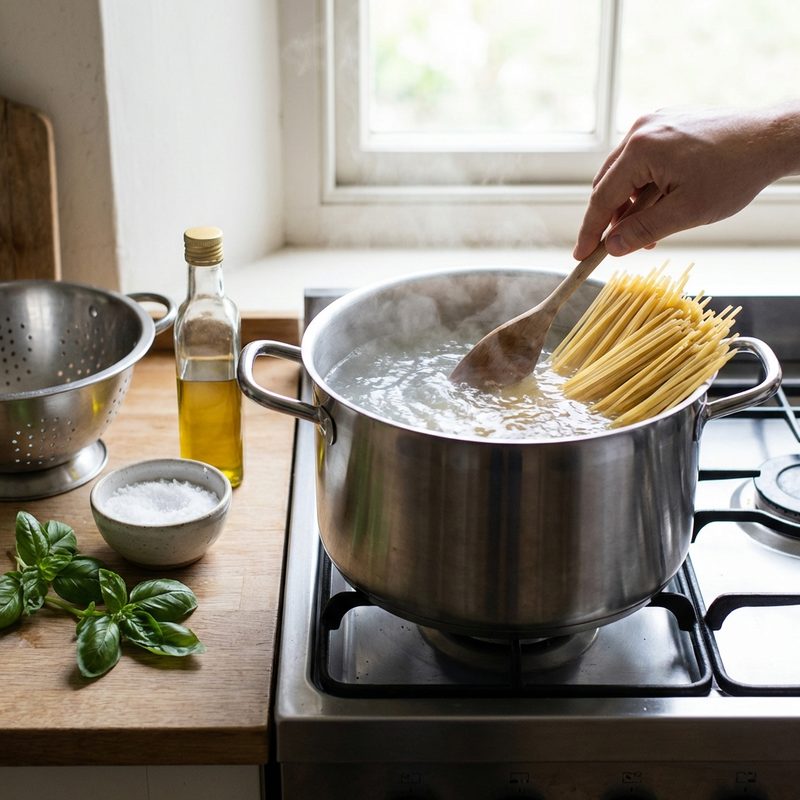
Step 6. Cook the thin ramen noodles in boiling water for only 45-90 seconds (Hakata style is usually firm).
Step 7. Divide the broth into bowls, add the noodles, and top with slices of chashu, half a marinated egg, wood ear mushrooms, green onions, and a pinch of beni shoga. Serve immediately.
💡 Chef's Tips
-
·
To achieve the signature white color, you must vigorously boil the broth; this emulsifies the pork fat into the water.
-
·
Scrubbing the bones after the first blanching is the most important step for a clean flavor and color.
-
·
Hakata noodles are traditionally served 'barikata' (very firm), so do not overcook them.
-
·
If you have a pressure cooker, you can reduce the broth cooking time to 3-4 hours on high pressure.

Be the first to leave a comment.